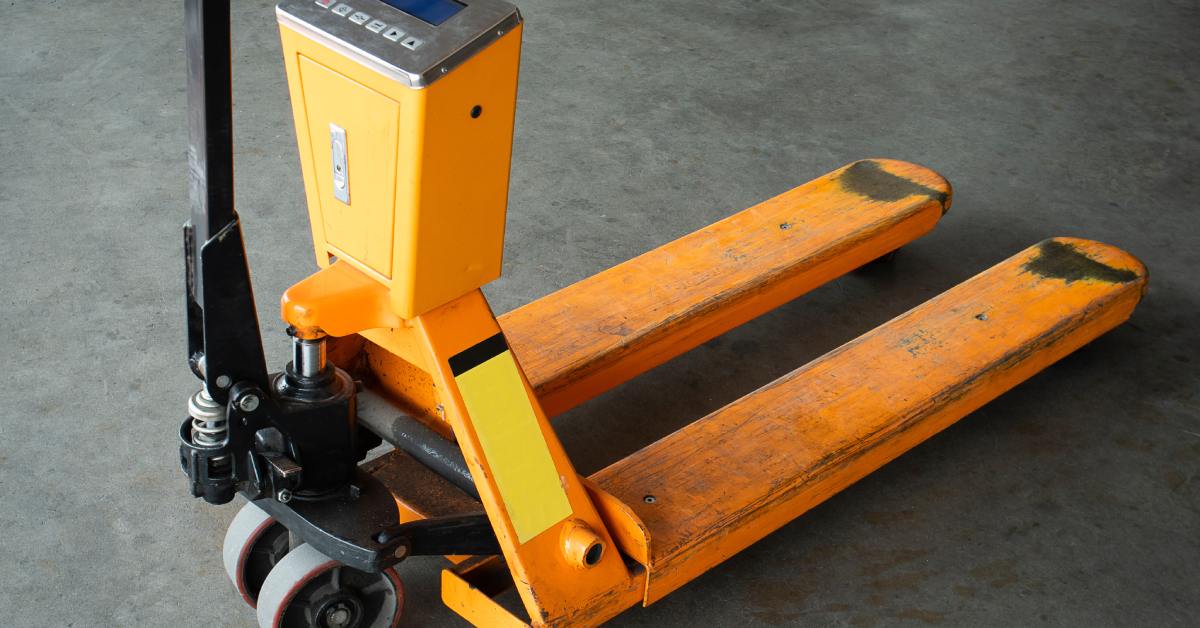
Warehouse efficiency relies on speed and precision. You need to move products quickly, but you also need accurate weight measurements for shipping and inventory management. When operators rush, they often introduce a variable called dynamic loading, which can throw off weight measurements and impact your bottom line.
Dynamic loading occurs when the weight placed on a scale fluctuates during the weighing process due to movement, vibration, or unstable positioning. Understanding the impact of dynamic loading on pallet jack scale accuracy helps you maintain proper measurements and avoid costly shipping errors.
How Motion Impacts Weight Readings
Scales function best in a static environment. When you place a load on a pallet jack scale, the load cells need a moment to settle and register the force of gravity pulling down on the mass. Dynamic loading disrupts this process.
If an operator weighs a pallet while the jack is still in motion, or if they drop the load onto the forks abruptly, the scale experiences a spike in force that exceeds the actual weight of the object. This shock loading can cause the digital readout to fluctuate wildly or settle on a false positive reading. Even small vibrations from a forklift driving nearby can create enough dynamic noise to affect sensitive load cells, throwing off the measurement.
The Consequences of Inaccurate Weighing
Ignoring the effects of dynamic loading leads to a ripple effect of operational headaches. Consistently inaccurate readings cause problems like shipping disputes, where underestimating weight leads to carrier fees and fines, while overestimating causes you to overpay for shipping.
If you track inventory by weight, errors can accumulate over time, leading to significant stock variances. Additionally, severe shock loading from dropping heavy pallets can permanently damage the load cells within a pallet jack with a built-in scale, requiring expensive repairs or replacement.
Best Practices for Ensuring Accuracy
You can mitigate the effects of dynamic loading by training your team on proper weighing techniques. Implementing a few standard procedures means your equipment delivers the precision you paid for.
Consider adding the following steps to your work processes:
- Come to a complete stop. Always make sure the pallet jack is stationary before checking the load’s weight.
- Lower loads gently. Use the hydraulic release to lower the pallet onto the scale smoothly rather than letting it drop.
- Wait for stability. Most modern digital indicators have a stability annunciator (usually a small light or icon). Instruct operators to wait for this indicator before recording the weight.
- Use filtering settings. Many advanced scales offer dynamic weighing modes or filtering settings that average out vibrations to provide a stable reading even in active environments.
Optimizing Your Warehouse Workflow
Precision doesn’t have to come at the expense of speed. By understanding dynamic loading’s impact on pallet jack scale accuracy and adjusting your processes, you protect your revenue and your equipment. If your current scales struggle to maintain accuracy in your busy environment, it’s time to look at Prime USA Scales’ pallet jack scales, which are designed with advanced capabilities for dynamic environments.