
In logistics, agriculture, and many other industries, weight equals money. Every pound of commodity you buy or sell represents revenue entering or leaving your business. Because financial transactions in the sectors depend so heavily on these measurements, accuracy becomes a legal necessity. Business owners must navigate a complex landscape of regulations to ensure their operations remain lawful and profitable.
The term “legal-for-trade” appears frequently when shopping for industrial weighing equipment, yet many operators aren’t sure exactly what it entails. Understanding what legal-for-trade truck scale certification is protects your business from costly fines, lawsuits, and lost revenue.
Legal-for-Trade Standards in Weighing
A legal-for-trade classification indicates that a specific weighing device meets the rigorous standards required for commerce. When a business calculates the price of a product based on its weight, the law requires the scale to hold this certification. This rule applies to everything from the small deli scale at a grocery store to massive industrial truck scales weighing tons of scrap metal.
The primary goal of these standards is to protect the consumers. It ensures that when a customer pays for 1,000 pounds of gravel, they receive exactly 1,000 pounds. Conversely, it protects the seller from giving away product due to an under-reading scale. Regulatory bodies design these standards to create a fair marketplace where all parties can trust the transaction. If your business facilitates sales by weight, your equipment must carry this seal of approval.
The Role of NTEP in Certification
In the United States, the National Type Evaluation Program (NTEP) acts as the gatekeeper for these standards. The National Conference on Weights and Measures (NCWM) administers this program. NTEP evaluates weighing equipment to confirm it complies with the specific requirements listed in the National Institute of Standards and Technology (NIST) Handbook 44.
When a manufacturer designs a new scale, they submit it to NTEP for testing. The program puts the device through a gauntlet of evaluations, testing for accuracy, the effect of temperature changes, and durability over time. If the device passes these tests, NTEP issues a certificate of conformance (CoC). This certificate proves that the equipment design meets all applicable US standards for commercial use. Inspectors look for this CoC when they visit a facility. Without it, they can shut down weighing operations immediately.

Industries That Mandate Certified Weighing Systems
While almost every sector uses scales, specific industries face stricter scrutiny regarding legal-for-trade compliance. Understanding where your business falls in this spectrum helps you budget for the right equipment.
Here are some of the industries that require certification:
- Waste and recycling: Transfer stations charge fees based on the tonnage of waste dropped off, and scrap yards pay customers based on the weight of metal brought in. Both sides of this equation require certified accuracy.
- Agriculture: Farmers selling grain, livestock, or produce by the pound must use certified scales to ensure fair payment from buyers or processors.
- Logistics and shipping: Freight companies often charge based on weight. An uncertified scale can lead to billing disputes and damaged client relationships.
- Chemical and mining: Raw materials in these sectors hold high value. Even a small percentage of error translates to significant financial variance.
Commercial Usage vs. Internal Monitoring
Not every weighing application requires a legal-for-trade device. Identifying the distinction between commercial transactions and internal monitoring can save your business money. If you use weight data solely for internal processes, inventory tracking, or quality control, you likely do not need an NTEP-approved scale.
For instance, a manufacturing plant might monitor the amount of raw material entering a mixer to maintain product consistency. Since the company does not sell the product at that specific stage, a non-certified scale suffices. Similarly, a logistics manager might utilize a non-certified semi-truck weight scale strictly to ensure a vehicle meets highway safety limits before leaving the yard.
However, business owners should exercise caution. If there is any chance you might use the scale for commerce in the future, investing in legal-for-trade equipment upfront often makes the most sense. Retrofitting or replacing a scale later costs significantly more than buying the correct unit initially.
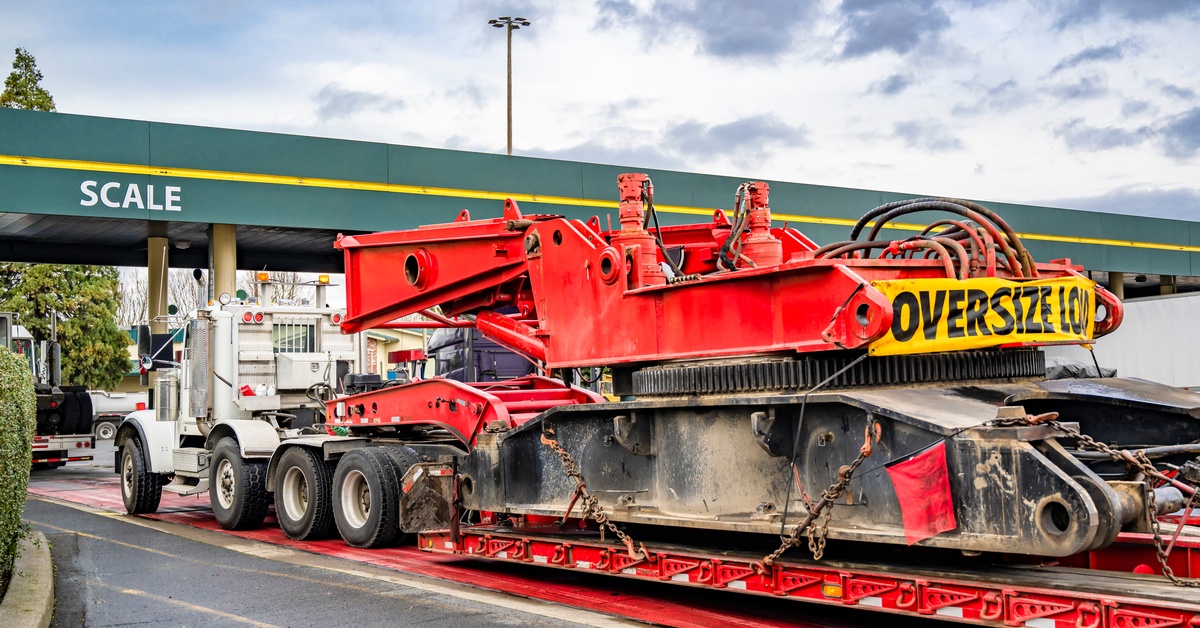
The Correct Scale for Your Business Model
Choosing the right equipment impacts your operational efficiency just as much as your compliance status. Manufacturers offer various configurations to suit different volume needs and site constraints, including:
- Axle scales: These are ideal for checking individual axle weights to avoid highway fines. While some are NTEP approved, operators typically use them for compliance rather than total cargo sales.
- Full-length truck scales: These weigh the entire vehicle at once. They provide the most efficient solution for high-volume commercial transactions.
- Portable scales: These offer flexibility for temporary jobsites, such as logging or construction projects. Many portable models carry full legal-for-trade certification.
When selecting a scale, make sure you verify the NTEP certificate number with the manufacturer. Reliable suppliers, such as Prime USA Scales, clearly list the approval status for all applicable products. Also, be sure to look for robust warranties and scales with steel deck construction that can handle the harsh environment of industrial weighing.
The Long-Term Value of Weighing Precision
Viewing legal-for-trade truck scale certification as a mere regulatory hurdle misses the bigger picture. Precision in weighing serves as a significant business asset. Utilizing an accurate, certified scale signals to your customers that you operate with integrity. It eliminates disputes over delivered quantities and streamlines the billing process.
Furthermore, certified scales generally feature higher build quality. To pass the stringent NTEP evaluations, manufacturers must use superior load cells, junction boxes, and structural steel. This means that when you invest in a legal-for-trade scale, you buy equipment that is built to last.
Ultimately, compliance protects your bottom line. It keeps the state inspectors happy, builds trust with your client base, and ensures you get paid for every ounce of product you handle. Whether you need a portable weighing solution or a permanent concrete deck installation for your scales, make sure you prioritize scale certification. It turns your industrial scale from a simple tool into a trusted financial instrument.