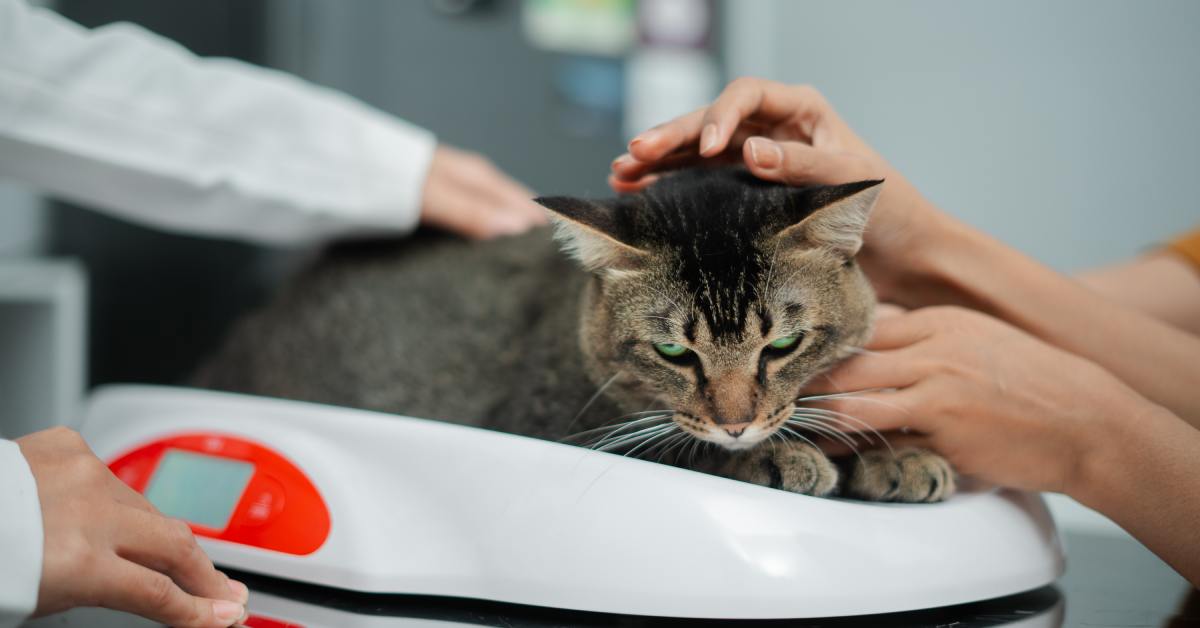
When you purchase equipment for your veterinary practice, you look for marks of quality and reliability. For weighing scales, you’ll encounter various certifications, but two of the most common are NTEP and ISO 9001. They sound official, yet they represent very different aspects of quality and compliance. Understanding the distinction is vital for a veterinary professional, so let’s explore NTEP vs. ISO 9001 compliance for veterinary weighing scales to see what they mean for your practice.
What is NTEP Certification?
These two standards are not interchangeable; one focuses on the product’s performance, and the other on the manufacturer’s processes. An NTEP certification tells you a scale is legally approved for trade based on its accuracy and performance. An ISO 9001 certification tells you the company that built the scale follows a specific quality management system. Both have value, but they answer different questions about the equipment you use.
NTEP stands for the National Type Evaluation Program. It’s a program administered by the National Conference on Weights and Measures (NCWM) that evaluates weighing and measurement equipment to see if it complies with national standards. When a scale earns an NTEP Certificate of Conformance, it is designated “Legal for Trade.”
The Importance of NTEP
The “Legal for Trade” designation means the scale has undergone rigorous testing to prove it is accurate, reliable, and repeatable under a variety of conditions. The tests are extensive. They check the scale’s performance across different temperatures, its ability to return to zero, and its accuracy with loads placed at various points on the platform. The goal is to protect consumers and businesses in commercial transactions where weight determines the price.
For a veterinary clinic, this might seem like a standard for grocery stores or shipping depots. But the principle of accuracy is just as relevant. When you prescribe medication based on an animal’s weight, that measurement is a transaction of care. An inaccurate weight could lead to an incorrect dosage, which has direct health implications for your patient.
An NTEP-certified scale provides confidence that the weight displayed is correct and trustworthy. It’s an independent verification of the device’s capability. For example, if a 50-pound dog is weighed on an NTEP scale, you can be certain the measurement is precise, which allows for accurate anesthetic or medication calculations. This is the core value of NTEP in a clinical setting.
An Introduction to ISO 9001 Certification
ISO 9001 is a global standard for Quality Management Systems (QMS). It is fully developed and published by the International Organization for Standardization (ISO). Unlike NTEP, ISO 9001 does not certify a specific product. Instead, it certifies that a company’s processes for design, development, production, and service meet a defined standard of quality and consistency.
When a manufacturer is ISO 9001 certified, it means they have established, documented, and maintain a system to manage quality. This includes procedures for everything from how they handle customer feedback to how they control documents and records. The focus is on consistency, continuous improvement, and customer satisfaction.
An independent body audits the company to verify its compliance with the ISO 9001 standard. This audit confirms that the company does what it says it does. For you as a customer, an ISO 9001 certification suggests the manufacturer is truly committed to quality control and has reliable systems in place. It’s an indicator of a well-run organization.
This process-oriented approach means that two different ISO 9001 certified companies could produce scales of vastly different quality. The certification confirms they follow their own quality procedures; it does not set a performance benchmark for the final product itself. It’s a certification of the system, not the scale.

The Core Difference: Product vs. Process
As you browse the many weighing products for sale online, such as cattle weighing scales, remember that the fundamental distinction between certifications lies here: NTEP certifies the product, and ISO 9001 certifies the process. An NTEP certificate tells you that the specific scale model performs to a high, legally defined standard of accuracy. An ISO 9001 certificate tells you that the company that made this scale has a robust, documented system for quality management.
You might find a company with ISO 9001 certification that produces scales which would not pass NTEP testing. Likewise, a small, specialized manufacturer might produce an excellent NTEP-certified scale without ever pursuing ISO 9001 certification for its broader business operations.
Why Does This Matter for a Veterinary Clinic?
In a veterinary context, accuracy is critical. The health and safety of your patients depend on precise measurements for diagnostics, treatment protocols, and medication dosages. Therefore, the performance of the scale itself is the most direct concern.
An NTEP-certified scale gives you a verifiable guarantee of that performance. It assures you that the equipment meets a strict, independent standard for accuracy, which is directly applicable to the clinical tasks you perform daily. When you need to be certain about a patient’s weight, NTEP is the certification that provides that certainty.
This does not mean ISO 9001 is without value. A manufacturer with ISO 9001 certification is likely to have better customer support, more consistent product manufacturing, and a structured approach to any issues that may arise. It’s a good sign that you are dealing with a reputable and organized company. It adds a layer of confidence in the manufacturer’s professionalism and long-term reliability.
Many of the best scale manufacturers hold both certifications. They pursue ISO 9001 to refine their internal processes and demonstrate their commitment to quality management. They also submit their products for NTEP evaluation to prove their scales meet the highest performance standards required for commercial use. This combination offers the best of both worlds: a proven product from a proven company.

Your Guide to Choosing the Right Scale
When you evaluate weighing scales for your clinic, look for the NTEP Certificate of Conformance first. This is your assurance of the scale’s accuracy and reliability for the clinical task at hand. It’s the standard that speaks directly to the performance you require.
After you confirm NTEP certification, you can then consider the manufacturer’s credentials, such as ISO 9001. A company that holds both demonstrates a comprehensive commitment to quality from its internal systems to its final products.
Contact our team today to discuss your clinic’s needs. We can help you navigate the options and find a scale that offers the precision your patients deserve. Understanding the difference between NTEP vs. ISO 9001 compliance for veterinary weighing scales empowers you to make an informed decision and invest in equipment that truly supports the high standard of care you provide.