
When you’re in the market for a new weighing scale, you’ll come across a lot of technical jargon. Words like linearity, repeatability, and hysteresis pop up in product descriptions and spec sheets. It’s easy to get lost in the platform scale terminology, but understanding these concepts is key to picking the right tool for your job. So, what exactly is hysteresis, and why should you care about it when you’re weighing heavy-duty items? Let’s explore this below.
Defining Hysteresis
Hysteresis is one of those terms that sounds more complicated than it is. Think of it as a scale’s “memory.” It describes how a scale behaves differently when you’re adding weight compared to when you’re taking it away.
An ideal scale would show the exact same weight for an object whether you’re loading it on or unloading it. However, in the real world, mechanical and electronic parts don’t always return to their original state perfectly. This slight difference is hysteresis.
An Example
Imagine you place a 50 lb weight on your platform scale, and it reads 50.0 lbs. Then, you add another 50 lbs, bringing the total to 100 lbs. Now, you remove that second 50 lb weight. You’d expect the scale to go right back to 50.0 lbs, right?
If the scale shows a slightly different number, say 50.2 lbs, that small discrepancy is hysteresis error. This error typically occurs because the internal components of the scale, like the load cells and springs, don’t return to their exact starting position immediately after the weight is removed. It’s like a rubber band that’s been stretched—it might not snap back to its original length right away.
What Causes Hysteresis Error?
Though we have already reviewed the main physical process behind the error, let’s break it down more and review a few other factors at work.
Mechanical Stress
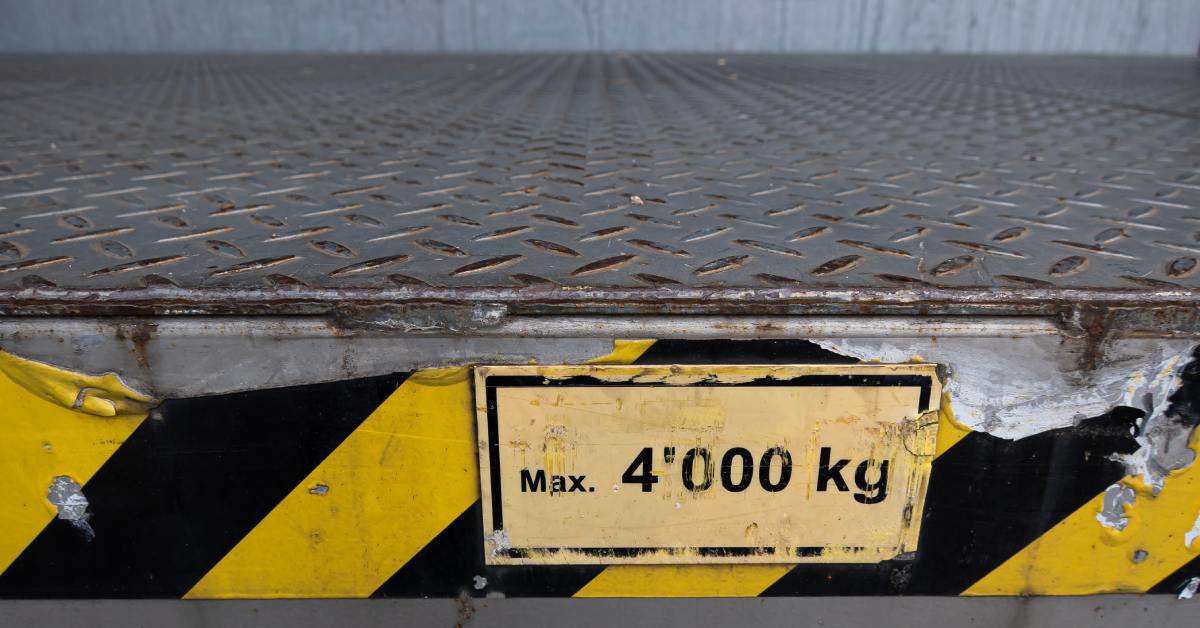
The primary cause is the mechanical stress on the scale’s load cells. Load cells are the sensors that convert the force of the weight into an electrical signal. They are designed to deform slightly under load and then return to their original shape. However, this process isn’t perfect. Factors like temperature, material fatigue, friction between moving parts, and microscopic imperfections in the metal can prevent the load cell from returning to its exact zero point after a load is removed. This residual strain results in a hysteresis error.
Environmental Factors
Your working environment can also play a part. Temperature fluctuations are a big one. As the temperature changes, the metal components in the scale can expand or contract, affecting their elasticity and leading to inconsistent readings.
Similarly, high humidity can introduce moisture, which might cause friction or minor corrosion in the scale’s internal parts. Even air pressure and vibrations from nearby machinery can contribute to small errors.
Overloading
Have you ever put something on your scale that was way over its capacity? Overloading a scale, even just once, can permanently damage the load cells. This damage can cause them to deform beyond their elastic limit, meaning they won’t return to their original shape. This leads to significant and often permanent hysteresis.
Normal Wear
It’s a fact of life—everything degrades. General wear and tear from years of use can deform the scale’s components, making hysteresis more pronounced over time.
Why Does Hysteresis Matter for Your Business?
You might be thinking that small errors are no big deal. But in many industrial applications, that “tiny” error can have big consequences. Let’s look at why hysteresis is something you should take seriously.
Accuracy in Commercial Transactions
If you’re using your scales for trade—selling goods by weight—accuracy is a legal requirement. A scale with high hysteresis could cause you to overcharge or undercharge customers. For example, if you’re weighing bulk materials and the scale reads differently when loading versus unloading, you could be giving away product for free or short-changing your clients. Both scenarios are bad for business and can lead to financial losses and a damaged reputation.
Consistency in Manufacturing and Processing
In manufacturing, precise measurements are everything. Think about batching ingredients for food products, mixing chemicals, or creating compounds. If your scale has a hysteresis issue, the amount of material you add to a mix might vary from batch to batch. This inconsistency can affect product quality, lead to failed quality control checks, and result in wasted materials. The result is a less efficient process and higher production costs.
Reliability and Longevity of Your Equipment
Hysteresis can also be an early warning sign that your scale is on its way out. An increasing hysteresis error might indicate that the load cells are fatigued or damaged. Ignoring this could lead to a complete scale failure that you aren’t prepared for. Regular calibration and testing for hysteresis can help you catch these issues early and perform maintenance before they become major problems.
Managing Hysteresis in Your Scales
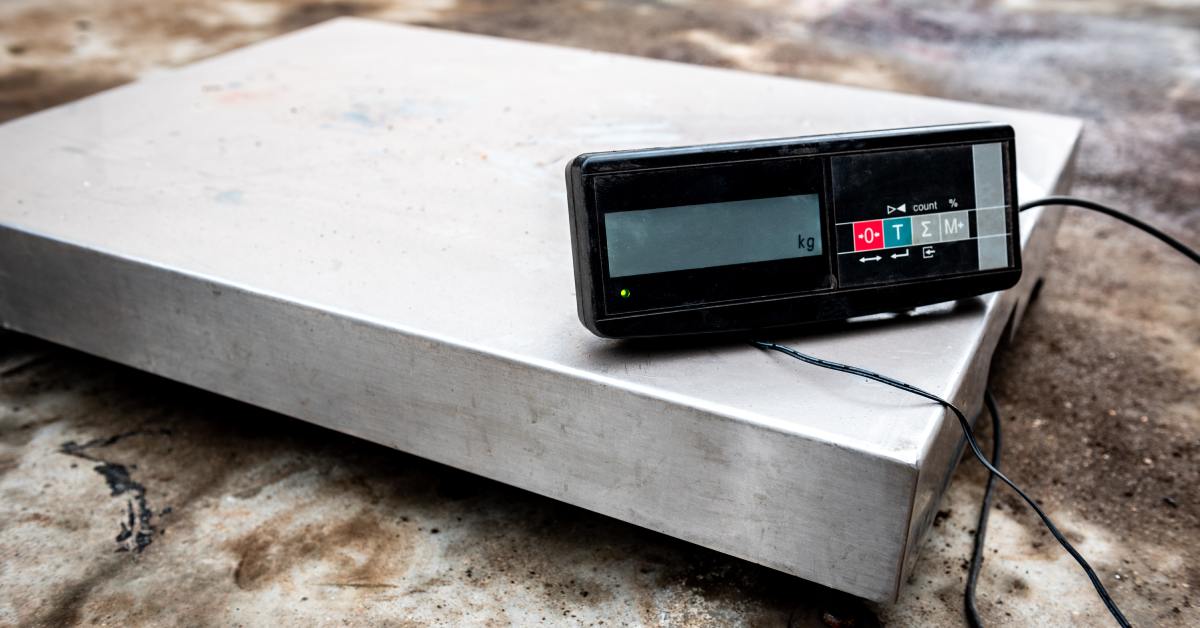
The good news is that hysteresis is manageable. While you can’t eliminate it entirely, you can take steps to minimize its impact and make sure your scales are performing as they should be.
Don’t Be Cheap
First, invest in quality equipment. High-quality scales are built with better materials and more robust load cells that are less susceptible to hysteresis. They might cost more upfront, but they pay for themselves in accuracy and longevity.
Calibrate Often
Second, perform regular calibration. Calibration checks your scale’s accuracy against known standards and allows you to adjust for any errors, including hysteresis.
Treat the Scale Kindly
Finally, use your scale correctly. Avoid overloading it, protect it from extreme temperatures and moisture, and place it on a stable, level surface free from vibrations. Proper usage goes a long way in preserving the health of your equipment.
Your Partner for Precise Weighing
Understanding platform scale terminology, including what hysteresis is, helps you make smarter decisions when buying and maintaining industrial scales. A reliable scale with low hysteresis is an asset that supports efficiency and consistency.
When you need equipment that you can count on, it’s important to work with a supplier who understands these technical details. At Prime USA Scales, we offer a wide range of heavy-duty platform weighing scales designed for precision and durability. Our team can help you find the right solution for your specific needs and ensure you get the performance you expect.
If you have questions or need help selecting a new scale, don’t hesitate to reach out. Call us at (866) 699-3342 or email info@primeusascales.com to speak with one of our experts.